In 2026, the question is no longer whether your business should move to the cloud — it’s how to do it smartly. Hybrid cloud has emerged as the dominant answer for enterprises worldwide, combining the security and control of private infrastructure with the scalability and innovation of public cloud platforms like AWS, Microsoft Azure, and Google Cloud. Rather than forcing a choice between the two, hybrid cloud lets you have both — on your own terms.
Whether you’re a growing business looking to scale without spiralling costs, or an established enterprise navigating strict data compliance requirements, hybrid cloud offers a flexible, future-proof foundation. This guide breaks down exactly what hybrid cloud is, why businesses are adopting it at record rates in 2026, and how you can get started with a clear, practical roadmap.
- What Is Hybrid Cloud?
- How Hybrid Cloud Works
- Key Benefits for Businesses
- Top Use Cases by Industry
- Hybrid Cloud vs Public vs Private vs Multi-Cloud
- Common Challenges & How to Overcome Them
- Major Hybrid Cloud Vendors in 2026
- How to Get Started: Step-by-Step for Businesses in 2026
- Conclusion
- FAQs — Hybrid Cloud
What Is Hybrid Cloud?
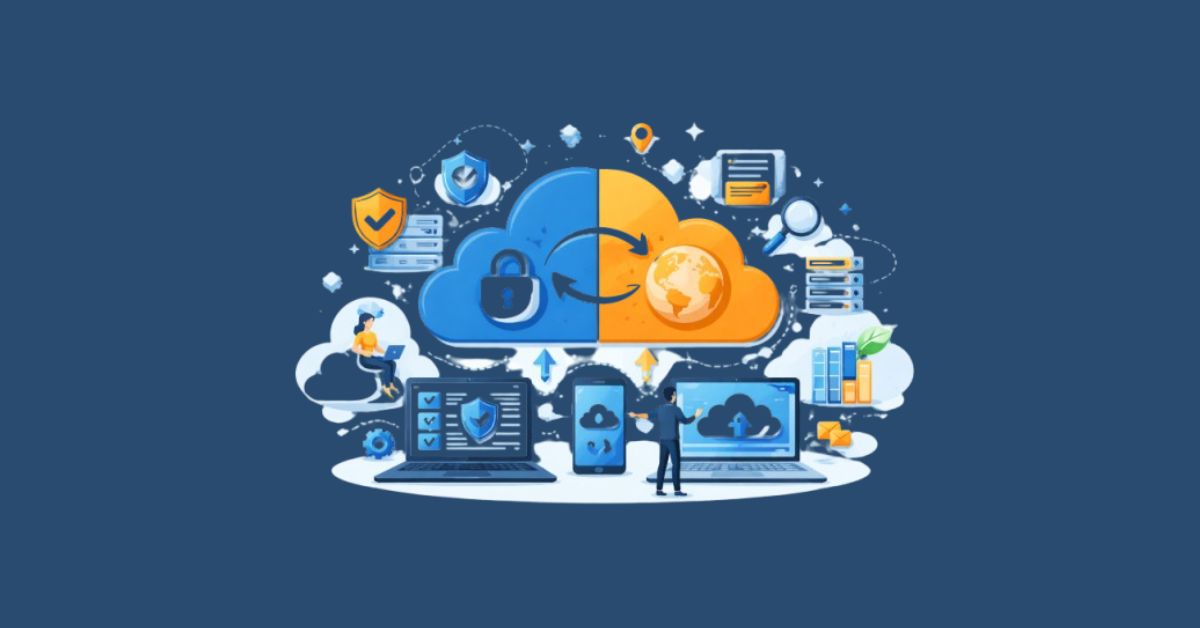
Hybrid cloud is a computing environment that combines a private cloud (or on-premises infrastructure) with one or more public cloud services — with orchestration between the two platforms. In simple terms, it means your business can run some workloads on your own servers or private data centre while simultaneously using the resources of cloud providers like AWS, Microsoft Azure, or Google Cloud.
A practical definition: Hybrid cloud is the strategic use of both on-premises/private cloud and public cloud infrastructure, connected and managed as a unified environment to meet specific business, compliance, or performance needs.
Think of it like a business that operates both a secure in-house vault (for the most sensitive assets) and a flexible, scalable warehouse elsewhere (for everything else). You manage both as one system, moving things between them as needed.
How Hybrid Cloud Works
At its core, hybrid cloud works through three fundamental components working in tandem:
Private Environment
This is your on-premises data centre, a colocation facility, or a private cloud hosted by a third party. It is dedicated entirely to your organisation, giving you full control over hardware, security policies, and data residency. This is where regulated data, legacy systems, and mission-critical workloads typically reside.
Public Cloud Environment
These are shared infrastructure platforms from providers like AWS, Azure, or Google Cloud. They offer virtually unlimited compute capacity, global availability, and a rich ecosystem of managed services (AI/ML, databases, analytics, DevOps tools, etc.) — all on a pay-as-you-go model.
The Integration Layer
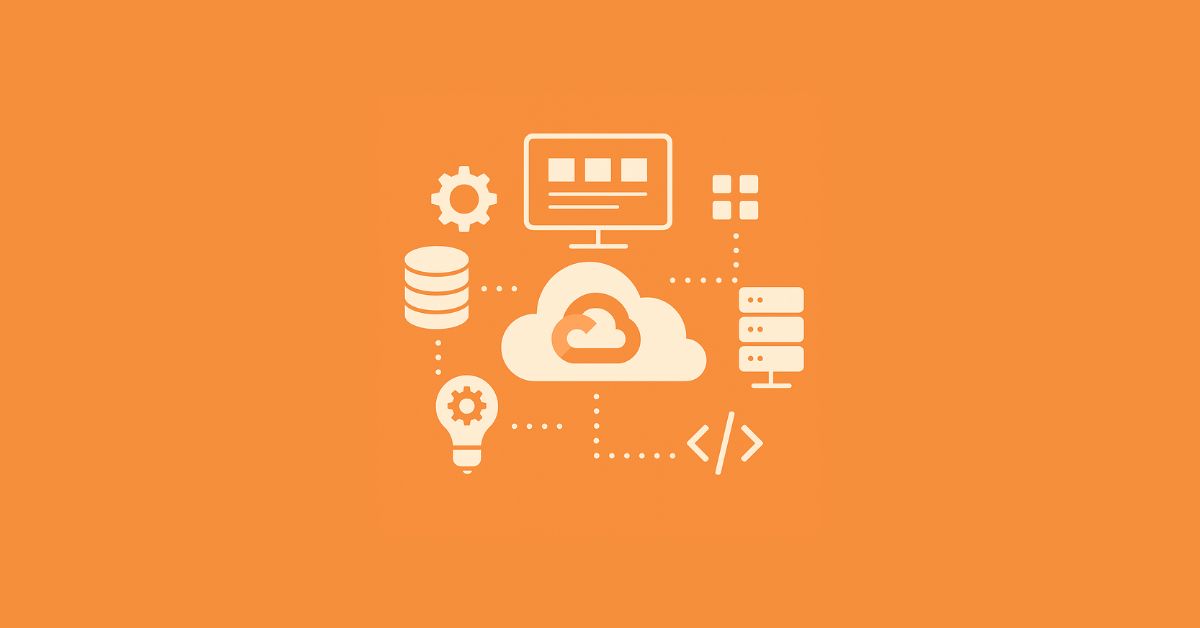
This is the connective tissue — VPNs, dedicated network links (like AWS Direct Connect or Azure ExpressRoute), APIs, container orchestration platforms (Kubernetes), and hybrid cloud management tools. This layer allows workloads to communicate, data to flow securely, and administrators to manage everything from a single control plane.
Modern hybrid cloud deployments also leverage technologies like containerisation (Docker, Kubernetes), service meshes, and unified identity & access management (IAM) to ensure consistent policy enforcement across both environments.
Key Benefits for Businesses
Cost Optimisation
Pay only for public cloud resources when you need them. Keep steady-state workloads on private infrastructure where the per-unit cost is lower over time.
Scalability & Elasticity
Burst into public cloud during peak demand (sales events, seasonal loads) without permanently over-provisioning private infrastructure.
Enhanced Security & Compliance
Keep sensitive data (financial records, PII, health data) on-premises or in a private cloud while leveraging public cloud for non-sensitive workloads.
Business Agility
Deploy new applications faster using public cloud services and DevOps toolchains, without waiting for hardware procurement cycles.
Disaster Recovery
Use public cloud as a secondary site for backup and failover — dramatically reducing RTO/RPO without the cost of a full secondary data centre.
AI & Innovation Access
Tap into public cloud AI/ML services, GPU compute, and managed data platforms without building expensive in-house capability.
Strategic Business Control
Beyond technical advantages, hybrid cloud gives CIOs and IT leaders strategic flexibility — the ability to negotiate with multiple vendors, avoid lock-in, and migrate workloads over time as technology and business requirements evolve. This vendor leverage is increasingly important in 2026 as cloud pricing models continue to shift.
Top Use Cases by Industry
| Industry | Hybrid Cloud Use Case | Why Hybrid (Not Fully Public)? |
|---|---|---|
| Banking & Finance | Core banking on-premises; AI fraud detection and customer analytics on public cloud | Regulatory data residency, PCI-DSS compliance, legacy system integration |
| Healthcare | Patient records on private cloud; telehealth apps and AI diagnostics on public cloud | HIPAA/DPDP compliance, patient data sovereignty |
| Retail & E-Commerce | Inventory systems on-premises; cloud-bursting during Diwali, Black Friday or seasonal peaks | Cost efficiency, handling unpredictable traffic spikes |
| Manufacturing | OT/IoT data processed at the edge; ERP and supply chain analytics in public cloud | Low-latency requirements on factory floor, data sovereignty |
| Government & Public Sector | Classified systems on private; citizen-facing apps on public cloud | Sovereignty, data classification mandates |
| Media & Entertainment | Content libraries on-premises; rendering, transcoding and streaming on public cloud | Burst compute for rendering, global CDN delivery |
| Logistics & Supply Chain | Route optimisation and tracking in public cloud; warehouse systems on-premises | Real-time analytics, global scalability |
Hybrid Cloud vs Public vs Private vs Multi-Cloud
These terms are often confused. Here is a clear breakdown:
Public Cloud
Shared infrastructure owned by providers (AWS, Azure, GCP). Elastic, low upfront cost. Less control over data location and security.
Private Cloud
Dedicated infrastructure for one organisation. High control and security. High upfront cost. Limited elasticity.
Hybrid Cloud
Combines private + public with integration. Balances control, compliance, cost, and scale.
Multi-Cloud
Uses multiple public cloud providers (e.g., AWS + Azure). Avoids vendor lock-in. Can be combined with hybrid architecture.
Importantly, hybrid cloud and multi-cloud are not mutually exclusive. Many mature enterprises in 2026 run a hybrid multi-cloud strategy — combining private/on-premises infrastructure with two or more public cloud providers for maximum resilience and flexibility.

Common Challenges & How to Overcome Them
Complexity- Managing two or more environments requires unified orchestration tools. Use platforms like VMware Cloud Foundation, Azure Arc, or AWS Outposts to maintain a single pane of glass.
Security- Expanded attack surface across environments. Adopt a Zero Trust security model, enforce consistent IAM policies, and encrypt data in transit and at rest everywhere.
Data Latency- Moving data between private and public environments introduces latency. Architect workloads to minimise cross-environment data movement. Use dedicated connectivity (Direct Connect, ExpressRoute) over public internet.
Skills Gap- Hybrid environments require expertise in both on-premises and cloud-native technologies. Invest in training, consider managed service providers (MSPs), and prioritise platform-level abstraction tools.
Cost Spraw- lWithout governance, cloud costs can escalate unpredictably. Implement FinOps practices — use tagging policies, budget alerts, and workload placement policies to ensure cost-optimal routing of workloads.
Compliance- Ensuring regulatory compliance across environments is complex. Use compliance-as-code tools (Terraform Sentinel, AWS Config Rules) and document data flows explicitly for auditors.
Major Hybrid Cloud Vendors in 2026
Microsoft Azure
Azure Arc extends Azure management to any infrastructure. Azure Stack Hub for on-premises deployments. Market leader for enterprise hybrid.
AWS
AWS Outposts brings AWS hardware on-premises. ECS Anywhere and EKS Anywhere extend container services to any location.
Google Cloud
Anthos/GKE Enterprise provides consistent container management across environments. Strong in AI/ML workloads and open-source tooling.
IBM Cloud
IBM Cloud Satellite extends IBM Cloud to any environment. Particularly strong in regulated industries and mainframe integration.
VMware (Broadcom)
VMware Cloud Foundation remains the dominant private cloud hypervisor. VMware Cloud on AWS bridges private VMware estates to public cloud.
Red Hat / OpenShift
OpenShift provides Kubernetes-based hybrid platform that runs consistently on-premises and across all major public clouds.
How to Get Started: Step-by-Step for Businesses in 2026
Assess and inventory your current infrastructure
Catalogue every workload, application, and dataset. Classify by sensitivity (public, internal, confidential, regulated). Identify technical dependencies, performance requirements, and compliance obligations. This audit is the foundation of your cloud strategy.
Define your hybrid cloud strategy and goals
Align with business objectives. Are you reducing costs? Improving resilience? Accelerating innovation? Define measurable KPIs (e.g., infrastructure cost reduction target, deployment frequency, RTO/RPO targets). Get executive buy-in before proceeding.
Identify workload placement
Using your inventory, decide what stays on-premises, what moves to public cloud, and what is refactored as cloud-native. A good rule of thumb: sensitive/regulated data stays private; stateless, scalable apps move to public cloud; critical legacy apps stay on-premises initially.
Choose your hybrid cloud platform and vendors
Select a primary public cloud provider (AWS, Azure, or GCP) based on your existing Microsoft/Google/AWS relationships and workload fit. Choose a management platform (Azure Arc, AWS Outposts, VMware Cloud) that supports your private environment. Avoid decisions that create deep single-vendor lock-in.
Design your network and connectivity
Establish secure, dedicated connectivity between your private environment and public cloud (AWS Direct Connect, Azure ExpressRoute, or VPN as a minimum). Design your network segmentation, firewall rules, and traffic routing policies before migrating any workloads.
Implement a unified security and identity framework
Extend your identity provider (Active Directory, Okta, etc.) to cover both environments. Adopt Zero Trust principles. Deploy consistent security policies, logging, and monitoring across all environments using tools like Microsoft Defender for Cloud or Prisma Cloud.
Containerise and modernise applications
Where possible, package applications in containers using Docker and manage them with Kubernetes (EKS, AKS, GKE, or OpenShift). Containers are the lingua franca of hybrid cloud — they run consistently everywhere, making workload portability practical rather than theoretical.
Pilot, measure, and iterate
Start with a non-critical workload as your first hybrid cloud migration. Measure performance, cost, and operational complexity against your pre-migration baseline. Use lessons learned to refine your architecture, governance, and tooling before scaling to production-critical systems.
Establish FinOps and governance practices
Implement cloud cost management from day one. Tag all resources, set budget alerts, define workload placement policies, and review spend monthly. Establish a Cloud Centre of Excellence (CCoE) to maintain governance standards as your hybrid environment grows.
Build internal skills and a cloud-first culture
Invest in cloud training certifications (AWS Solutions Architect, Azure Administrator, Google Cloud Professional). Foster a DevOps or platform engineering culture. Consider partnering with a Managed Service Provider (MSP) for the first 12–18 months while internal capability matures.
Conclusion
Hybrid cloud is not a transitional phase on the road to full public cloud — it is, for most enterprises, the permanent destination. The ability to keep sensitive workloads close, scale elastically when needed, and consume innovation from public cloud providers is a durable architectural advantage, not a stepping stone.
In 2026, the question is no longer “should we adopt hybrid cloud?” but rather “how do we optimise our hybrid cloud strategy?” The businesses that are winning are those that treat hybrid cloud as a first-class operating model — with dedicated governance, FinOps discipline, a unified security posture, and a platform engineering team that manages the environment as a product.
Whether you are a mid-sized manufacturing firm in Ahmedabad looking to burst capacity to the cloud during peak season, or a multinational bank navigating complex data sovereignty regulations, the hybrid cloud framework gives you the tools to compete, comply, and grow — on your own terms.
Start small. Measure everything. And build a hybrid cloud estate that serves your business for the decade ahead.
Ready to transform your business with hybrid cloud?
Get a free consultation with our cloud experts. We’ll assess your current infrastructure, identify the right hybrid strategy, and provide a clear, practical roadmap aligned with your goals.
FAQs — Hybrid Cloud
The main purpose of hybrid cloud is to give businesses the flexibility to run workloads in the most optimal environment — keeping sensitive or regulated data on private infrastructure while using public cloud for scalability, innovation, and cost efficiency. It bridges the gap between full control and full flexibility.
Yes, when properly configured, hybrid cloud can be highly secure. Businesses retain full control over their most sensitive data by keeping it on-premises or in a private cloud, while applying consistent security policies — such as Zero Trust architecture, encryption, and unified identity management — across both environments.
Hybrid cloud combines private/on-premises infrastructure with at least one public cloud. Multi-cloud refers to using multiple public cloud providers (e.g., AWS and Azure together). These are not mutually exclusive — many enterprises run a hybrid multi-cloud strategy that includes both approaches simultaneously.
The most common challenges include managing complexity across environments, maintaining consistent security, controlling costs, bridging the skills gap, and ensuring data compliance. These can be addressed with unified management platforms, FinOps practices, Zero Trust security models, and investing in staff training.
Hybrid cloud costs vary widely depending on your existing infrastructure, chosen public cloud provider, workload volumes, and connectivity requirements. The model is generally cost-efficient because you avoid over-provisioning — paying for public cloud resources only when needed, while maximising the use of existing private infrastructure.
Virtually every major enterprise uses hybrid cloud in 2026 — including banks, hospitals, retailers, manufacturers, and government agencies. Companies like HDFC Bank, Walmart, Siemens, and NHS Digital are well-known examples of organisations running large-scale hybrid cloud environments.
The leading hybrid cloud platforms in 2026 include Microsoft Azure Arc, AWS Outposts, Google Anthos (GKE Enterprise), VMware Cloud Foundation, IBM Cloud Satellite, and Red Hat OpenShift. The best choice depends on your existing infrastructure, workload type, and compliance requirements.
Hybrid cloud is most commonly adopted by mid-sized to large enterprises, but small businesses with compliance requirements, legacy systems, or unpredictable traffic spikes can also benefit. Many cloud providers now offer entry-level hybrid solutions that don’t require significant upfront infrastructure investment.
A basic hybrid cloud setup can take anywhere from a few weeks to several months, depending on the complexity of your existing environment. A full enterprise-scale hybrid cloud migration — including workload modernisation and governance frameworks — typically takes 12 to 24 months to mature properly.
Cloud bursting is a hybrid cloud technique where an application runs on private infrastructure under normal conditions but automatically “bursts” into public cloud resources when demand exceeds on-premises capacity. It’s widely used by retailers during peak sales events and media companies during live streaming.